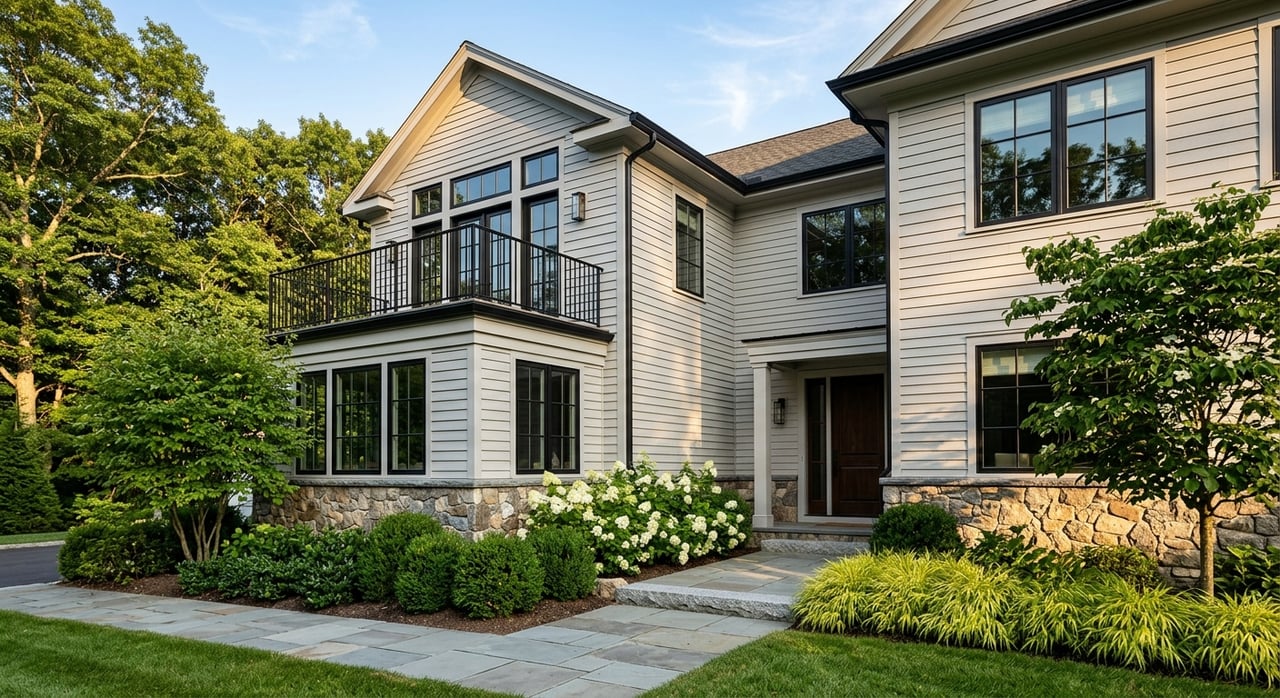
How Sellers Can Read the Chestnut Hill Luxury Market
April 16, 2026
April 16, 2026
Wondering whether Chestnut Hill’s luxury market still gives sellers the upper hand? The short answer is yes, but only if you read the signals correctly. In a market with high price points, limited inventory, and a small number of sales, broad headlines can be misleading. If you are thinking about selling in Chestnut Hill, this guide will help you understand what the numbers really mean, what today’s buyers are doing, and how to position your home more effectively. Let’s dive in.
Chestnut Hill has long held a premium place in the Greater Boston market. Its historic character and architectural importance are part of that identity, as reflected by the Chestnut Hill Historic District Commission.
That premium status shows up in pricing, but the exact number depends on which dataset you read. As of early 2026, Zillow’s home value index put the average Chestnut Hill home at $1,543,975 as of March 31, 2026, Redfin showed a February 2026 median sale price of $1.7M for the neighborhood, and Realtor.com showed a $2.95M median sale price with 5 homes for sale. Those figures are not necessarily conflicting. They reflect different geographies, time windows, and methods.
Chestnut Hill is a classic thin-data market. With only a small number of homes available and relatively few sales, a single large transaction can shift the median in a meaningful way.
That is why one month’s median price should be treated as a starting point, not a pricing strategy. The Massachusetts Association of Realtors Newton report notes that monthly swings can look extreme when sample sizes are small. For you as a seller, rolling trends and recent comparable sales usually matter more than one attention-grabbing market stat.
Days on market can tell you a lot, but only when you pair it with price point and property type. According to Redfin’s 02467 housing market data, the ZIP code had a 97.1% sale-to-list ratio and 39.5 median days on market. Redfin’s Chestnut Hill neighborhood page showed a 93.4% sale-to-list ratio and 28 days on market.
At first glance, that may sound fast. In many cases, it is. But speed alone does not tell the whole story. A well-priced home can move quickly, while an overpriced listing may sit, require reductions, and ultimately sell below expectations.
For broader context, the Newton market remained relatively tight in February 2026. The MAR report showed single-family homes at 1.5 months of supply and condos at 2.2 months of supply, with year-to-date original list price received at 97.2% for single-family homes and 95.8% for condos.
One of the most useful metrics for sellers is the sale-to-list ratio. It tells you how close homes are getting to their asking price.
In Chestnut Hill and the surrounding 02467 ZIP, current ratios suggest a market that is still competitive, but not one that consistently rewards aggressive overpricing. In other words, buyers are active, but they are still negotiating.
That distinction matters. If your home is priced with discipline and launched well, you may attract strong interest early. If it enters the market above what the active buyer pool is willing to support, you are more likely to lose momentum and invite concessions later.
Not every luxury listing behaves the same way. Recent sales in the area show that the higher and less standardized the price point, the more outcome variability you may see.
Recent examples from Redfin’s local market data help illustrate this:
The lesson is straightforward. Luxury is not one single market. A home around $2M may attract a deeper buyer pool than a highly customized estate above $5M. Likewise, a condo and a single-family home may perform very differently even within the same area.
In a market like Chestnut Hill, it can be tempting to anchor to the highest recent neighborhood sale. That approach often misses the real question: how many qualified buyers are actively shopping for a home like yours right now?
The current data suggest that correct pricing still gets rewarded. Overreach often does not. Some homes are selling at or near list in under 40 days, while others are sitting much longer and closing only after meaningful discounts.
That gap is important because it shows how much condition, presentation, layout, and price band affect results. The neighborhood name alone does not guarantee a premium outcome.
Today’s higher borrowing costs are shaping buyer behavior, even in upper-tier markets. As of April 9, 2026, Freddie Mac reported a 30-year fixed mortgage rate of 6.37%.
That does not mean buyers have disappeared. It does mean many buyers are more careful about monthly payments, carrying costs, and offer structure. In practical terms, they are often more responsive to homes that feel turnkey, well-presented, and realistically priced.
National luxury-market trends point in the same direction. The 2025 Luxury Market Review reported luxury single-family homes selling at 98.5% of list price with 26 days on market, and attached luxury homes at 98.49% of list with 31 days on market. The report also noted that economic uncertainty shaped more cautious buyer behavior.
If you are preparing to sell, the strongest strategy is usually to price to the active buyer pool in your exact segment, not to the broadest neighborhood average. That means looking closely at homes similar to yours in property type, condition, location, and price band.
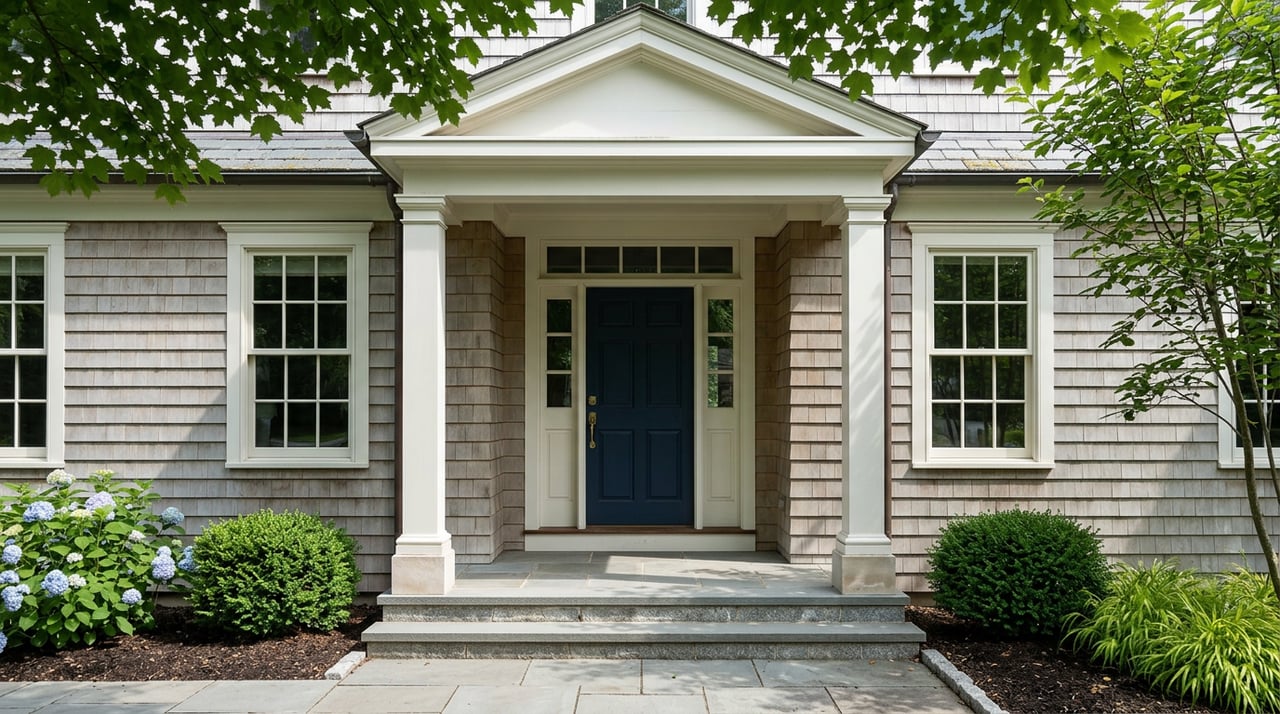
For example, a renovated condo, a classic center-entrance Colonial, and a large estate property may all sit in Chestnut Hill, but they should not be priced the same way simply because they share a ZIP code or neighborhood identity. Precision matters.
This is also where experienced local guidance can make a real difference. In a thin-data luxury market, interpreting the numbers is not just about reading a chart. It is about understanding which comparable sales actually compete with your home and which ones do not.
If you want to read the market clearly before listing, focus on these four signals:
Do not rely on one month of median pricing. In a small market, that number can move sharply based on just a few sales.
Look at recent sales and active competition in your property type and price tier. A condo buyer and an estate buyer are not shopping in the same way.
The first weeks on market matter. Homes that launch at the right number are better positioned to attract serious buyers before the listing grows stale.
Selective buyers tend to respond best to homes that feel polished, cared for, and market-ready. In a market where negotiation still happens, strong presentation can support stronger offers.
Chestnut Hill remains a desirable luxury market, and sellers still have meaningful opportunity. Inventory is relatively limited, and well-positioned homes can attract strong attention. At the same time, the current market is sending a clear message: buyers will pay for value, but they are less likely to reward wishful pricing.
If you are selling in Chestnut Hill, your best advantage is not the headline median. It is a pricing and presentation strategy built around your home’s specific lane in the market. For tailored guidance on timing, valuation, staging, and marketing, connect with Joan Solomont to request a complimentary market consultation.


Reach out to Joan for expert real estate services. Buy, sell, or rent properties with confidence.
Get In Touch With Joan To Learn More

27 BOYLSTON ST STE 310 CHESTNUT HILL MA 02467