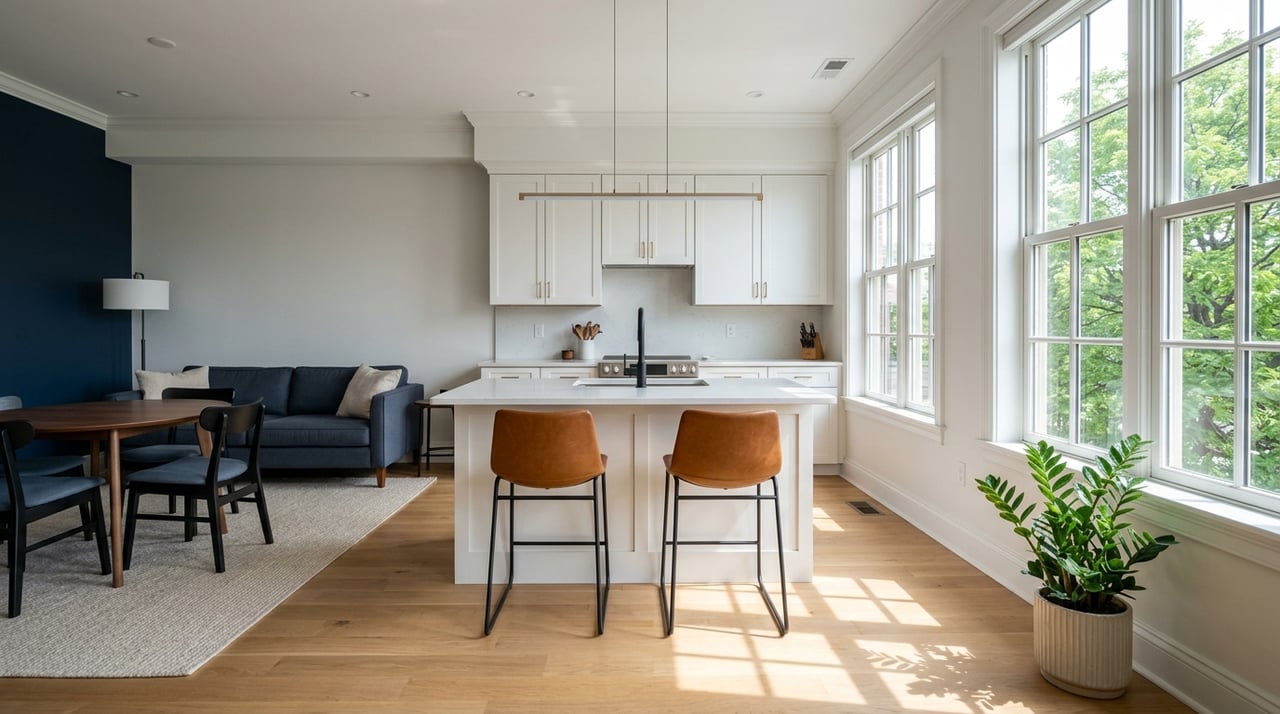
Downsizing to Boston From the Suburbs: Smart Housing Decisions
July 2, 2026
July 2, 2026
Thinking about leaving the suburbs for Boston? It can feel exciting and complicated at the same time. You may be ready for less upkeep and more convenience, but you also want to make smart choices about space, costs, parking, and neighborhood fit. This guide will help you think through the housing decisions that matter most so you can move with more clarity and confidence. Let’s dive in.
Downsizing to Boston is not just about buying a smaller home. In many cases, it is about trading private square footage for easier access to parks, libraries, dining, culture, and transportation.
That trade can make a lot of sense in Boston because the city offers a wide range of shared amenities. Boston maintains about 2,200 acres of protected parkland, the Boston Public Library system includes a central library and 25 branches, and the city has four state-designated cultural districts along with other notable cultural areas.
For you, that means the first question is not only how many rooms you need. It is also how much of your daily life you want to happen outside your home.
One of the biggest surprises for suburban buyers is that Boston is not one uniform market. It is a city of distinct neighborhoods, each with its own rhythm, housing stock, and street pattern.
The city identifies neighborhoods such as Back Bay, Beacon Hill, Bay Village, the North End, East Boston, South End, Hyde Park, Roslindale, and Jamaica Plain as places with very different identities. Some are known for historic rowhouse living, some for waterfront access, and some for a more suburban feel within city limits.
That matters because your move will likely feel more successful if your new neighborhood supports your routines. If you want a denser, more historic setting, one group of neighborhoods may fit better. If you want a quieter feel with more of a residential rhythm, another part of the city may be a better match.
Boston remains an expensive and active market, so downsizing does not automatically mean spending less. Over the last three months, Redfin reports a median Boston sale price of $851,990, with homes receiving about two offers on average.
For condo shoppers, there is also meaningful inventory to review. Redfin reports roughly 1,703 condo listings in Boston at a median listing price of $839K.
That gives you options, but it also means you need to weigh price against monthly ownership costs, building features, and location. A smaller home in Boston can still carry a substantial monthly cost depending on the building and neighborhood.
For many suburban downsizers, a condo becomes the most practical housing type to consider in Boston. Condo ownership usually means you own your unit while sharing responsibility for the exterior and common areas with other owners.
That shared structure can remove a lot of maintenance from your personal to-do list. Condo fees often help cover exterior and common-area maintenance, and they may also support water, sewer, trash, amenities, insurance, and reserves.
This is where many buyers need to shift their mindset. Instead of focusing only on square footage, it often makes more sense to focus on function, ease, and long-term comfort.
A well-planned smaller home can live better than a larger but awkward one. When you compare Boston condos, think carefully about how the home works day to day.
Features worth weighing include:
These details can have a big impact on whether your next home feels easy and comfortable for years to come.
One of the most important downsizing decisions is understanding the true monthly cost of ownership. Condo or HOA dues are usually separate from the mortgage, and they can range from a few hundred dollars a month to more than $1,000 a month.
That means a smaller Boston home is not automatically cheaper to own. Your real monthly number may include the mortgage, condo fees, insurance, and other building-specific costs.
Before you buy, it helps to compare the full carrying cost, not just the purchase price. That is often where the best decision becomes clearer.
Not all condo buildings operate the same way. A building with healthy reserves and clear rules may feel very different from one with deferred costs or uncertainty.
As you evaluate options, ask about:
These questions can help you avoid surprises and choose a building that supports your long-term goals.
If you are moving from a suburb, parking may be one of the biggest practical changes. In many parts of Boston, residential streets use resident-permit parking, visitor spaces are limited, and vehicles without the correct permit can be ticketed.
The city is also not currently accepting petitions for new resident parking permit locations. That makes parking less flexible than many suburban buyers expect.
Because of that, it helps to decide early whether parking is a must-have or something you are truly ready to live without. This is not a small detail. It can shape your routine every day.
A unit with deeded garage parking may feel completely different from a similar condo that relies on street parking. The same is true for a building garage or a realistic plan to live with fewer cars.
As you narrow your search, think in clear terms about which of these fits your household:
Settling that question early can save you time and help you target the right buildings and neighborhoods.
Boston does give you more transportation choices than many suburbs. The city says the MBTA provides rail, bus, ferry, and paratransit service, and reduced fares are available for seniors, people with disabilities, and low-income riders.
Bluebikes can also support a lower-car routine. The system includes more than 5,600 bikes and nearly 600 stations, and nearly 90% of Boston households are within a 10-minute walk of a station. Boston residents can also access discounted memberships.
For many downsizers, this is part of the appeal. If your new neighborhood offers easier access to errands, recreation, and transit, you may not need the same kind of car-dependent setup you had in the suburbs.
Because Boston neighborhoods vary so much, the best move is often the one that matches your preferred pace of life. Some buyers want walkable historic streets and easy access to restaurants and cultural activity. Others want a calmer setting that still keeps them within city limits.
The city describes the North End as a highly visited Italian-American neighborhood with narrow streets and restaurants. East Boston is described as a waterfront neighborhood with immigrant roots and ethnic restaurants. Hyde Park is described as offering all the amenities of the city in a suburban environment.
Those differences can help you think more clearly about fit. Your ideal neighborhood may have less to do with price alone and more to do with how you want an ordinary Tuesday to feel.
A successful downsize often depends on what surrounds your home. Parks, library branches, cultural areas, transit access, and everyday services can help replace some of the private space you are leaving behind.
That is why neighborhood choice is such a major part of the housing decision. The right area can make a smaller home feel larger because more of your life happens comfortably beyond your front door.
If you are planning a move later in life, Boston also offers city-level support that can make the transition easier. The Age Strong Commission helps Boston residents age 55 and older with resources, savings, opportunities, Medicare counseling, benefit applications, and referrals.
Age-Friendly Boston also includes practical features such as walking maps, benches, public restrooms, and food access maps. These resources can support daily convenience and independence.
For many downsizers, this kind of support matters. A move works better when you are not just buying a home, but also choosing an environment that helps you stay connected and comfortable.
When you move from the suburbs to Boston, clarity matters more than speed. Before making an offer, it helps to answer a few practical questions honestly.
Consider these decision points:
The more clearly you answer these questions, the easier it becomes to separate a good-looking property from the right long-term move.
A thoughtful downsizing move is about more than reducing square footage. It is about choosing a Boston home and neighborhood that support the way you want to live now, with a realistic view of costs, convenience, and comfort. If you want experienced guidance as you weigh suburban sale timing against a move into Boston, Joan Solomont can help you plan the transition with the kind of steady, local insight that makes complex decisions feel manageable.

Reach out to Joan for expert real estate services. Buy, sell, or rent properties with confidence.
Get In Touch With Joan To Learn More

27 BOYLSTON ST STE 310 CHESTNUT HILL MA 02467