In Cambridge, Buyers Aren't Pricing the House. They're Pricing What Can Replace It.
September 17, 2026
September 17, 2026
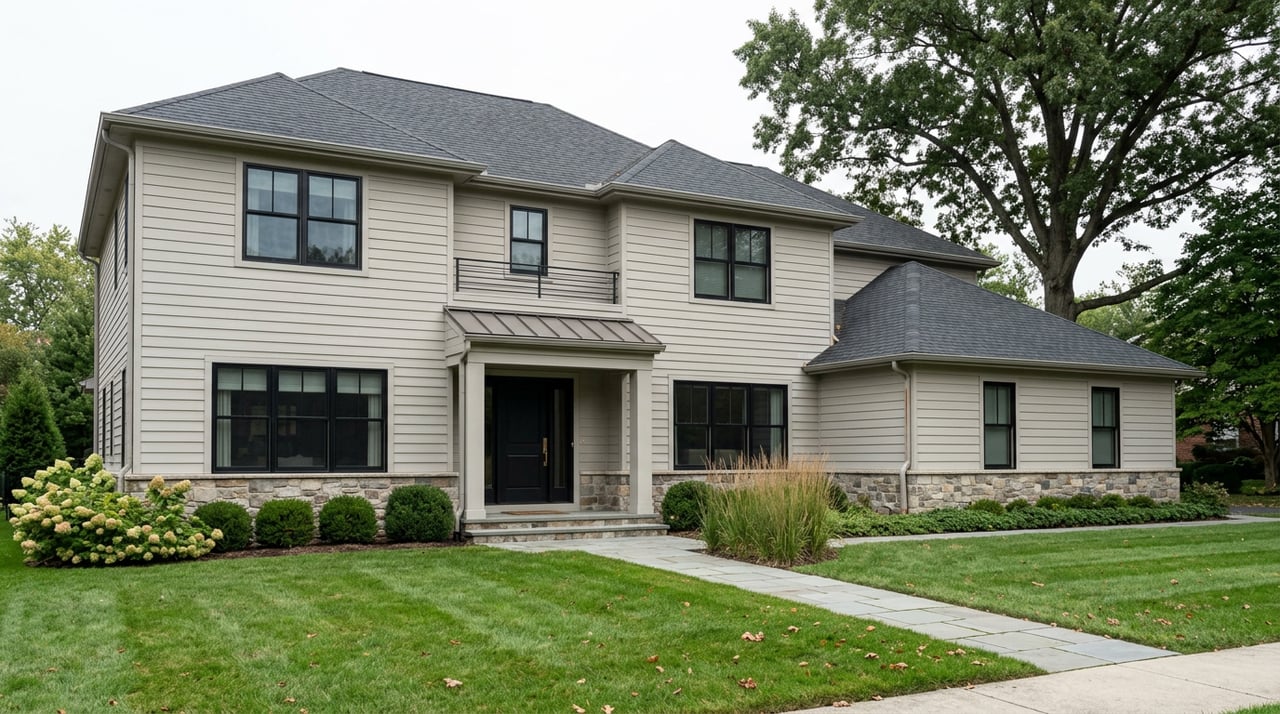
Michael Yogman has lived on Wyman Road long enough to know his neighbors by name. His stretch of the street is a quiet cul-de-sac of single-family houses in Cambridgeport, the kind of block where nothing much changes from one decade to the next. This year, a developer filed plans for a 56-unit building on that same cul-de-sac. Down the street, at 9 Wyman, preservation staff are now working through a separate dispute after a petition asked the Cambridge Historical Commission to study the property for landmark status. The commission recommended against an automatic landmark finding in May, meaning a formal decision would only come if someone files to tear the house down.
None of this happened by accident, and none of it is really about Wyman Road specifically. It traces back to one number that almost never shows up in a listing description: 5,000 square feet.
On February 10, 2025, the Cambridge City Council voted 8 to 1 to eliminate single-family and two-family-only zoning across the entire city. The vote folded nearly all residential neighborhoods into a single new district, Residence C-1, and rewrote the rules for what can be built there. Any residential lot in that district can now support a four-story multifamily building by right, meaning no special permit and no discretionary board approval required. Push past four stories to six, and the math changes: a lot has to be at least 5,000 square feet, and 20 percent of the residential floor area has to be set aside as permanently affordable housing.
That single dimensional threshold, 5,000 square feet, now sits underneath every teardown decision in the city. A lot below it can go to four stories with no inclusionary requirement tied to its size. A lot at or above it can go to six, but only if the project takes on the affordability set-aside. Two houses that look identical from the street, and that might carry similar list prices today, can sit on opposite sides of that line and be worth genuinely different things to the person deciding whether to buy them.
A year and a half into the new ordinance, the pattern showing up in Cambridge's permitting data is not random scatter. It clusters. City planners and reporting from the Boston Globe have both pointed to a rush of four-story proposals that stack three to nine units on a single lot, a size band that lets a project stay under the ten-unit and 10,000-square-foot thresholds that would otherwise trigger the inclusionary requirement. It is the sweet spot: enough density to make a project pencil, not enough to require the affordability set-aside.
The addresses behind that pattern are already public record. On Ivy Street near Fresh Pond, a single-family home is being replaced with eight condominiums. At 214 Allston Street, a developer is tearing down a small two- or three-family home to build the same number of units back, just bigger and more expensive. At 73 Kirkland Street, local architect and developer Martin Cafasso tore down a single-family house and is replacing it with a four-story, four-family building he has said he hopes will draw young families and older residents downsizing in place. Mike Tokatlyan of Contempo Builders, a Boston-based firm, has at least eight similar townhouse-style projects working through the pipeline citywide.
The other side of the 5,000-square-foot line looks different in scale but similar in logic. At 116 Norfolk Street, a redevelopment completed in early 2025 used the city's Affordable Housing Overlay to reach 62 units on a larger parcel. The Cambridge Housing Authority has since said that if a competing citizen petition to tighten the ordinance had been in effect, that project would either not have been possible or would have seen its unit count cut by 58 percent, down to 26 units. The lot size and the affordability trade-off are doing real work in both directions.
| Lot under 5,000 sq ft | Lot at least 5,000 sq ft | |
|---|---|---|
| By-right height | Up to 4 stories | Up to 4 stories, or 6 with inclusionary units |
| Inclusionary trigger tied to size | Not applicable at this size band | Required for the 6-story bonus |
| What's showing up in the pipeline | 3-to-9 unit projects, market rate | Larger projects, some using the AHO for scale |
| What it signals to a buyer | Redevelopment capped, more price stability | Redevelopment upside, but tied to affordability terms |
A tracker compiled by City Councilor Catherine Zusy's office, later analyzed by the Boston Globe, had identified more than 70 sites across the city with at least preliminary development plans as of this past July, adding up to more than 600 potential new homes. A separate count cited by WBZ put the number of tracked properties at nearly 130. Whichever count you use, the volume is real, and it is concentrated on the specific parcels where the zoning math works.
Zusy has been blunt about what she thinks that math is producing. As she put it to the Globe this summer, describing the effect of the 2025 reform:
"What we've essentially done is strip away all of the guardrails and let the free market decide what kind of housing gets built and where."
Here is the part that matters most if you are trying to price a Cambridge lot today rather than a year from now: the ordinance is not settled. A citizen petition filed by resident Doug Brown sought to reinstate on-site parking requirements and tighten several other provisions of the multifamily rules. The Planning Board voted unanimously to give it a negative recommendation on July 14, 2026. The Ordinance Committee followed with a 7 to 2 vote against it a week later, with only councilors Zusy and Tim Flaherty voting to keep it alive. The full council was expected to formally reject the petition on August 3.
That is not the end of the story, though. Zusy and Flaherty have their own, narrower amendment package working through the process separately, one that would increase setbacks, adjust off-street parking rules, and steer six-story buildings toward a handful of major corridors rather than allowing them on any qualifying lot citywide. That package was referred to a joint council committee back in June. Because the council recesses from July into early September, a vote was not expected until sometime this fall. As of today, that vote has not happened.
What this means in practical terms is that the 5,000-square-foot line and the six-story bonus tied to it are current fact, not settled fact. A lot that qualifies for six stories today under the existing rules could see that upside narrowed if the fall amendments pass, particularly if six-story buildings get restricted to specific corridors rather than any large-enough lot in the city.
If you are looking at Cambridge alongside other Greater Boston towns, the sale price on a portal listing is telling you what a house sold for, not what is likely to happen to the parcel next. A few things are worth confirming before you treat two similarly priced homes as comparable:
None of this is guesswork you have to do alone. It is the kind of parcel-level detail that changes the answer to "is this a good price" depending on what's actually buildable on the lot, not just what's currently standing on it.
A short note on what doesn't change. Existing single-family homes are not banned and don't have to be torn down. The new zoning allows more types of housing on a given lot. It does not require an owner to build anything differently or force a sale.
Is the 5,000-square-foot threshold likely to move? Nothing currently proposed changes that specific number. The pending amendments target setbacks, parking, and where six-story buildings are allowed, not the lot-size trigger itself, though that could shift as the fall council session unfolds.
Cambridge's zoning reform is one of the most closely watched local housing stories in the state, and the version of it that shows up in a median-price headline misses the parcel-by-parcel detail that actually determines what a specific address is worth. If you're weighing a Cambridge property against something in Somerville, Newton, or Brookline, or trying to understand what a specific lot's zoning position means for your own plans, Joan Solomont can walk through the parcel-level detail with you. Request a complimentary market consultation to talk through what a given address in Cambridge, or any of the surrounding towns Joan covers, actually supports under the current rules.

Reach out to Joan for expert real estate services. Buy, sell, or rent properties with confidence.
Get In Touch With Joan To Learn More

27 BOYLSTON ST STE 310 CHESTNUT HILL MA 02467